
In orbit, there are no second chances
Orbita lets you design and validate complex spacecraft GNC against high-fidelity physics: guidance, navigation and control, full mission context, and your own algorithms, in one loop, on your machine.
Most tools solve half of the GNC problem. Orbita does the whole loop
Generic model-based environments are not space-native. Mission-geometry tools don't close the loop. Ad-hoc code gets rebuilt every mission. Orbita does the whole loop: space-native GNC, full mission context and your own algorithms, in one validated environment.
Its core is a model-based architecture where dynamic models are interconnected blocks, so you can assemble complex systems and test them in a controlled, traceable way. Around it, Orbita adds the mission-analysis context to move faster: sensors and actuators, reference frames, constellations and other operational elements, all in the same loop.
Model-Based Block Architecture
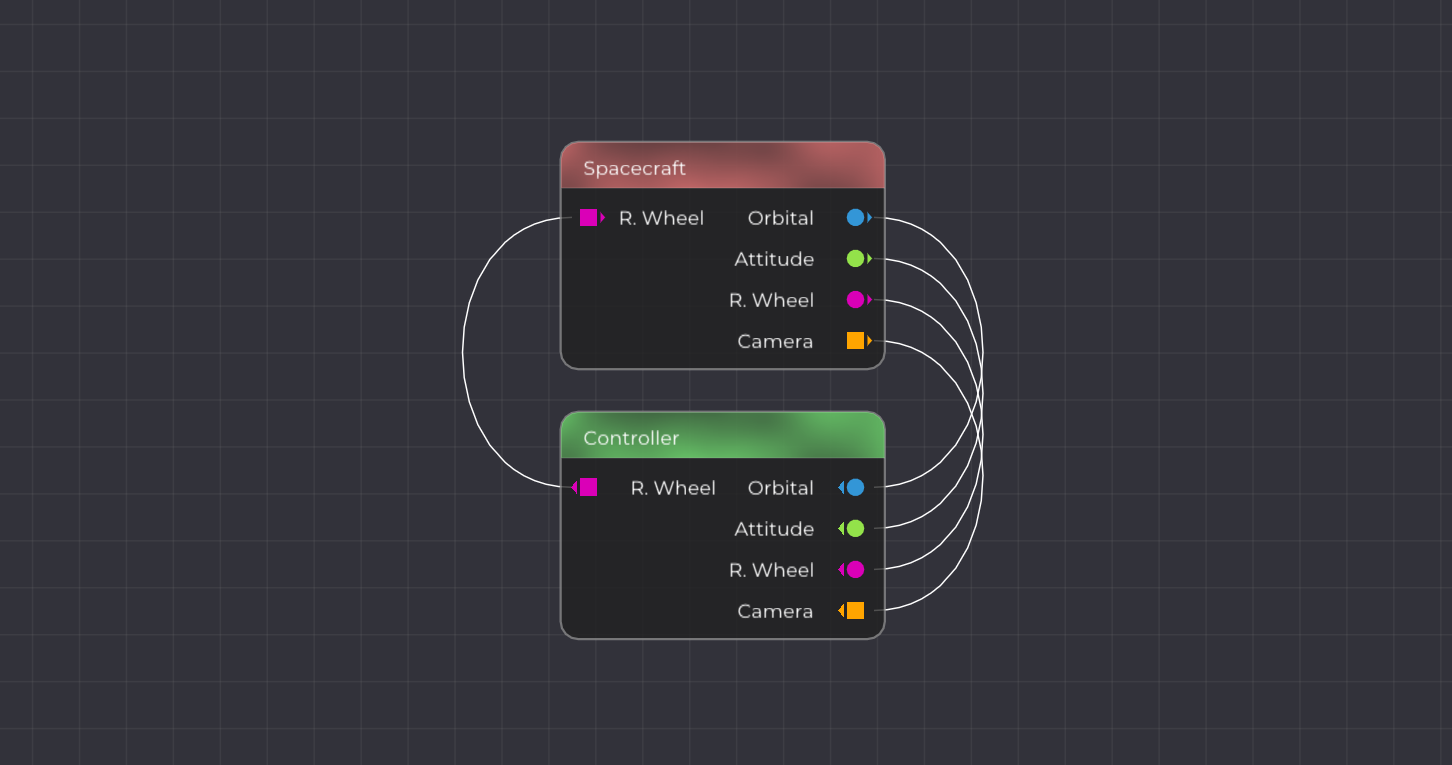
In Orbita, you define blocks that represent dynamic models, specify their inputs and outputs, and connect them through a simple graphical interface to build complex dynamic systems. This structure is well suited to validating navigation filters, guidance strategies, and control laws, while keeping the full system architecture visible and easy to evolve.
Extensive Customization Through API
Orbita is built to adapt to the workflows engineers already trust. Through an extensive API, users can create custom blocks and incorporate their own models, logic, internal processes, and AI-enabled capabilities directly into the platform. That makes it possible to preserve existing GNC know-how while opening the door to more advanced inference, automation, and data-driven workflows inside the same modeling and validation environment.
Efficient by Design
Performance is a design principle, not an afterthought. Orbita is developed in C++ with efficient implementations of the underlying dynamic models so that simulations remain realistic without becoming unnecessarily slow. When workloads benefit from parallelization, GPU execution can be used to accelerate demanding computations such as harmonics or attitude-dependent drag.
Closed-Loop Validation with Mission Analysis Context
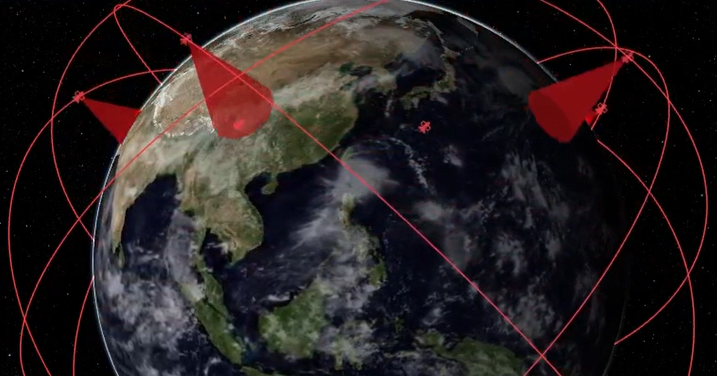
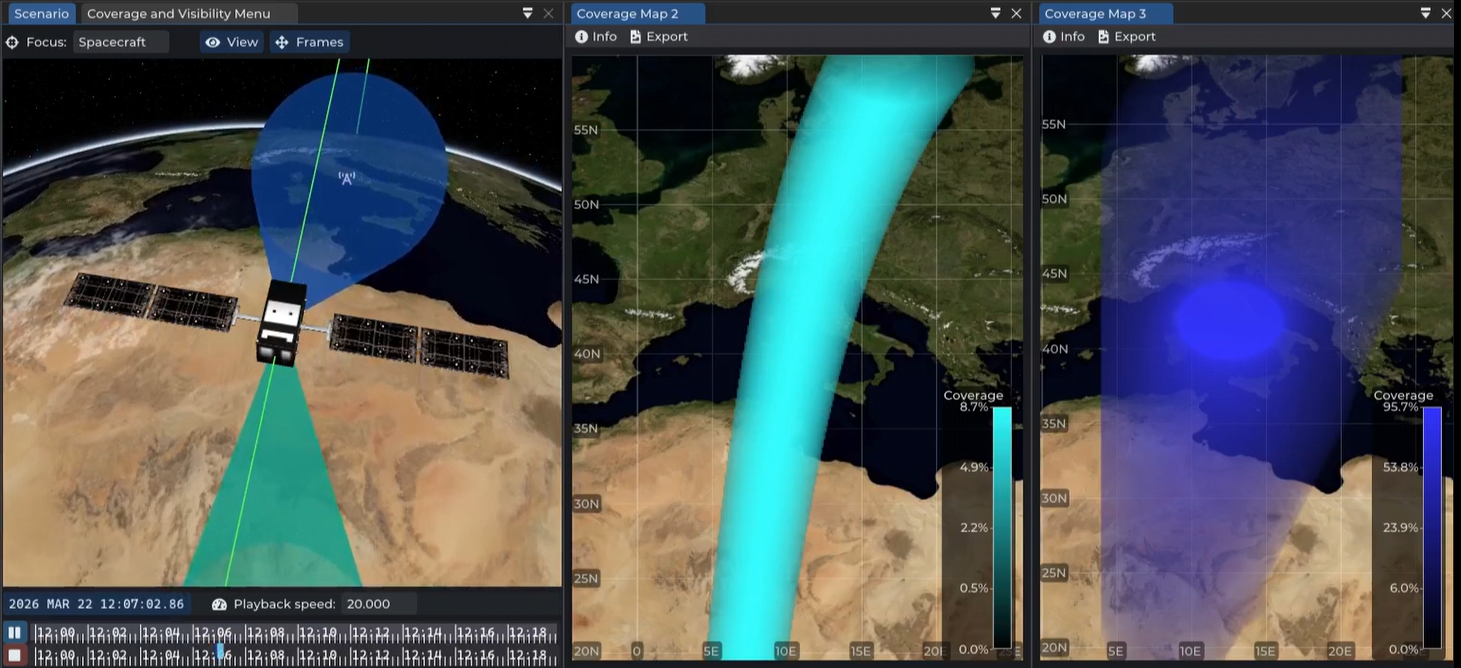
Orbita goes beyond isolated GNC models by providing a broader mission-analysis sandbox for fast iteration. You can represent orbits, reference frames, spacecraft, celestial bodies, visibility windows, communications constraints, stray light, and pointing geometry, among others, while testing the system.
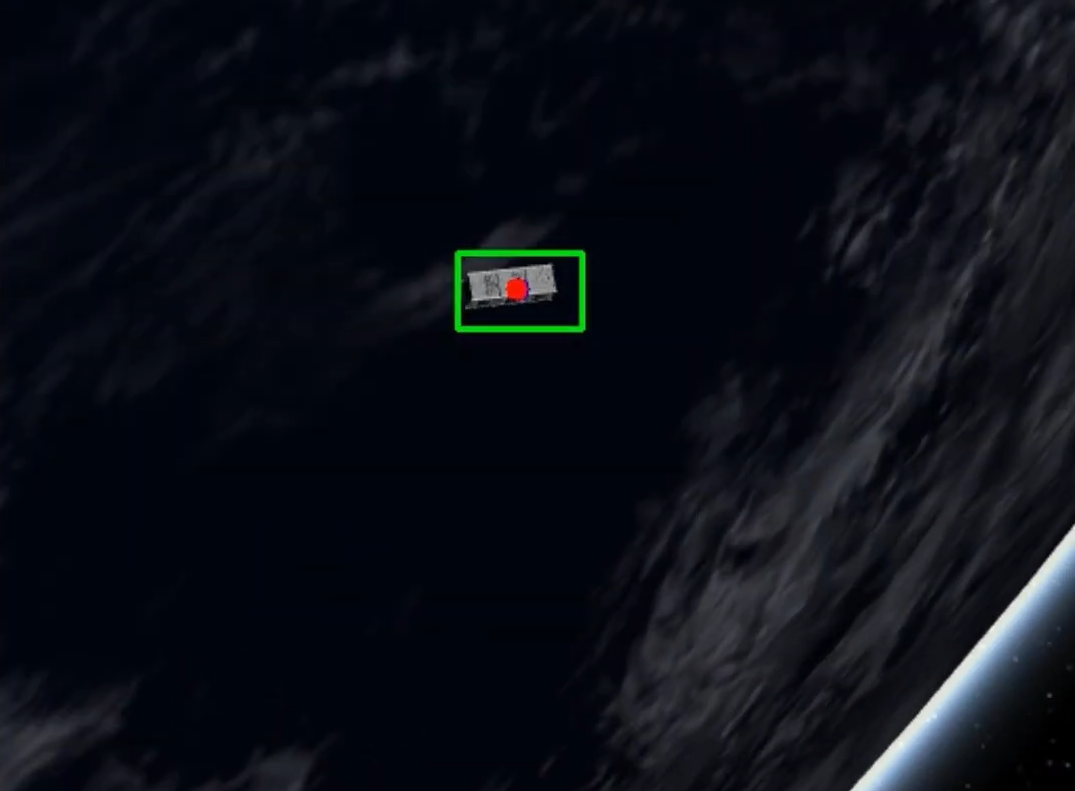
The in-house graphics engine enables closed-loop workflows that include spacecraft-mounted camera-like sensors.
Deployed on real programs. Recognized by the industry
Used Orbita's propagators, graphics engine and customizable controllers to validate a vision-based algorithm for tracking ground targets from LEO. The first deployment of Orbita's vision capability on a live program.
Read the storyRelies on Orbita's GPU-accelerated stray-light simulation to characterize and mitigate stray light on IACSAT-1, a satellite dedicated to exoplanet discovery.
Read the storyBring us your hardest scenario
Orbita is in active development with a small group of partners. You don't just get a license: you get the team, and a roadmap shaped by your mission.
Try the trial. Build your own scenario, end to end. Then bring us your hardest case and we'll prove it with you.
Prefer email? Write to info@hisperion.com